Note: Our website is reader-supported. We earn commissions when you buy through our links.
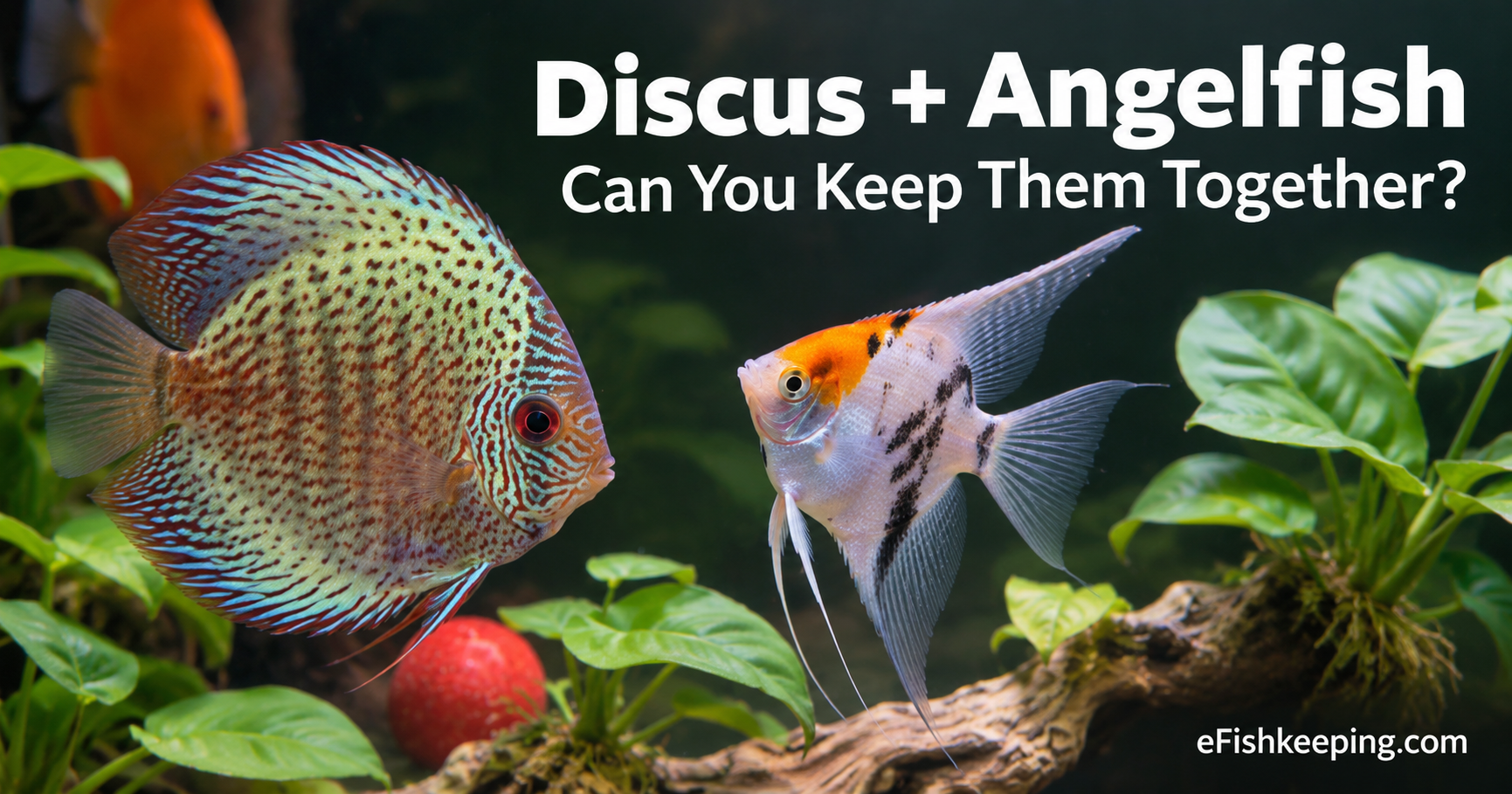
My discus and angelfish live in the same aquarium. They eat together, swim around peacefully, and rarely bother each other.
And honestly, watching them together is one of my favorite things about this aquarium.
I have a few discus fish, angelfish, Corydoras, and other bottom-feeding fish in my community tank.
They all seem quite comfortable sharing the space.
So, can you keep discus fish with angelfish?
Yes, you can! Discus and angelfish can live together peacefully in a well-maintained freshwater aquarium. Both are generally calm fish that enjoy warm water. As long as you give them enough space, proper food, and suitable water conditions, they can make good tank mates.
Of course, every fish has its own personality. That’s something I’ve learned from keeping different fish over the years.
Let me share how things work in my aquarium and what I’d recommend if you’re planning to keep them together.
You can also watch my discus and angelfish swimming together in the video below.
They’re mainly designed for algae-eating fish, particularly plecos. Corydoras also need their own balanced diet, so I wouldn’t rely on algae wafers as their only food.
If you’re keeping a community tank with different types of fish, make sure everyone gets suitable food.
What Water Temperature Is Best for Discus and Angelfish?
Both fish enjoy warm water, which is another reason they can make good tank mates.
Discus generally prefer temperatures around 82–86°F (28–30°C).
Angelfish are comfortable across a slightly wider range, usually around 78–84°F (26–29°C).
For a tank containing both species, 82–84°F (28–29°C) can be a suitable shared range for many captive-bred fish.
I recommend keeping your aquarium temperature as stable as possible.
Sudden temperature changes can stress fish, particularly discus.
An appropriately sized aquarium heater can help maintain a steady temperature.
Also, keep an eye on your aquarium’s pH and water hardness. Captive-bred discus may adapt to different water conditions, but consistency matters.
My Discus and Angelfish Aquarium Setup
I prefer keeping my aquarium setup fairly simple.
In my current tank, I use:
A sponge filter.
A top filter.
Plants and driftwood.
Open swimming areas.
Nothing overly complicated.
The sponge filter and top filter help keep the water moving and support the beneficial bacteria that process fish waste.
I also like having plants because they make the aquarium look natural.
And the fish seem comfortable swimming around them.
For adult discus, a large aquarium is important. Aqueon recommends at least 75 gallons for adult discus, and you’ll need to consider additional space for angelfish and other tank mates.
The exact tank size depends on how many fish you’re keeping.
I’d also suggest planning around the adult size of your fish instead of their current size at the store.
How I Manage Water Changes and Fish Health
Here’s something interesting I’ve noticed in my aquarium.
Sometimes, after a major water change or full cleanup, my fish seemed a little stressed.
My dad and I have noticed this on a few occasions.
It made me pay more attention to water changes and how they affect the aquarium.
Regular partial water changes are important for discus. The key is to make them gentle and consistent.
Replacement water should be treated to remove chlorine or chloramine and should be close to the aquarium’s temperature.
I also recommend checking your water regularly instead of relying only on how clear it looks.
One more thing worth knowing: beneficial bacteria mainly live on filter media and other aquarium surfaces. Normal partial water changes don’t remove most of them.
Keep an Eye on Your Discus
I once noticed that one of my discus had developed a problem around its head.
We acted quickly, and thankfully, the fish improved within a couple of days.
That experience reminded me how useful it is to observe your fish regularly.
Pay attention to their appetite, swimming behavior, breathing, and body color.
If anything seems unusual, check the water conditions and get qualified advice about possible illness.
Frequently Asked Questions
Can discus and angelfish eat together?
Yes. My discus and angelfish eat together without any feeding problems. However, some discus can be shy eaters, so watch your fish during meals.
Are discus fish more aggressive than angelfish?
Both species are generally peaceful, although either can chase other fish when competing for space or breeding. Individual personalities make a difference.
Can discus live with angelfish and Corydoras?
Yes, provided the Corydoras species can comfortably tolerate the warm water needed by discus. Tank size, feeding, and water quality are important too.
Do discus and angelfish need separate tanks?
Not necessarily. They can share a suitable community aquarium. If repeated fighting or feeding problems occur, keeping them separately may be better.
Final Thoughts
Keeping discus fish with angelfish has been a really enjoyable experience for me.
They look beautiful together, and I love watching their calm movements around the aquarium.
My discus are active during feeding, my angelfish don’t bother them, and everyone seems to get along well.
If you’re planning a similar setup, focus on giving your fish enough space, suitable food, stable water conditions, and regular care.
Pay attention to how your fish behave, and you’ll learn a lot about what works in your aquarium.
After all, the best part of fishkeeping is watching your fish enjoy the home you’ve created for them.
Hi! I’m Praveen Ghoshal, the founder of eFishkeeping.com. Inspired by my Dad, I got interested in fishkeeping when I was a kid. Since then, I have been involved with this hobby. Currently, I have 3 fish tanks at our home, and I enjoy this hobby with my full family. Read more about me here.